Love at First Swipe—The Business Model Canvas of Dating Apps
Destiny? Nahhh..
What if I tell you that finding your soulmate had less to do with fate and more to do with a well-designed business strategy?
Imagine swiping right on someone who shares your interests, only to realise that the app helping you find love is also trying to win your wallet.
Welcome to the world of dating apps, where romance meets revenue.
Tinder? Bumble? Hinge? Every platform promises to make meeting people easier.
But behind every profile and swipe, a business model is designed to attract users and keep the platform running.
So, how exactly do these apps turn the search for love into a profitable business?
The Business Model Canvas: A Blueprint for Business
The Business Model Canvas (BMC) is a popular strategic management tool that most business students are familiar with.
Basically, think of it as a blueprint.
Instead of looking at individual parts separately, the BMC shows how everything first together to keep a business running (Bachmann et al., 2025).
Unlike popular tools like SWOT and PESTLE, BMC focuses on how business creates, delivers, and captures value by connecting nine key building blocks into a single, cohesive business model.
For a dating app, this means examining not only how it helps people meet partners, but also how it attracts users, generates revenue, and manages costs.
Afterall, even Cupid needs a sustainable business model!
The BMC of Dating Apps
Before we dive into the BMC components, let me show you the BMC of dating apps:
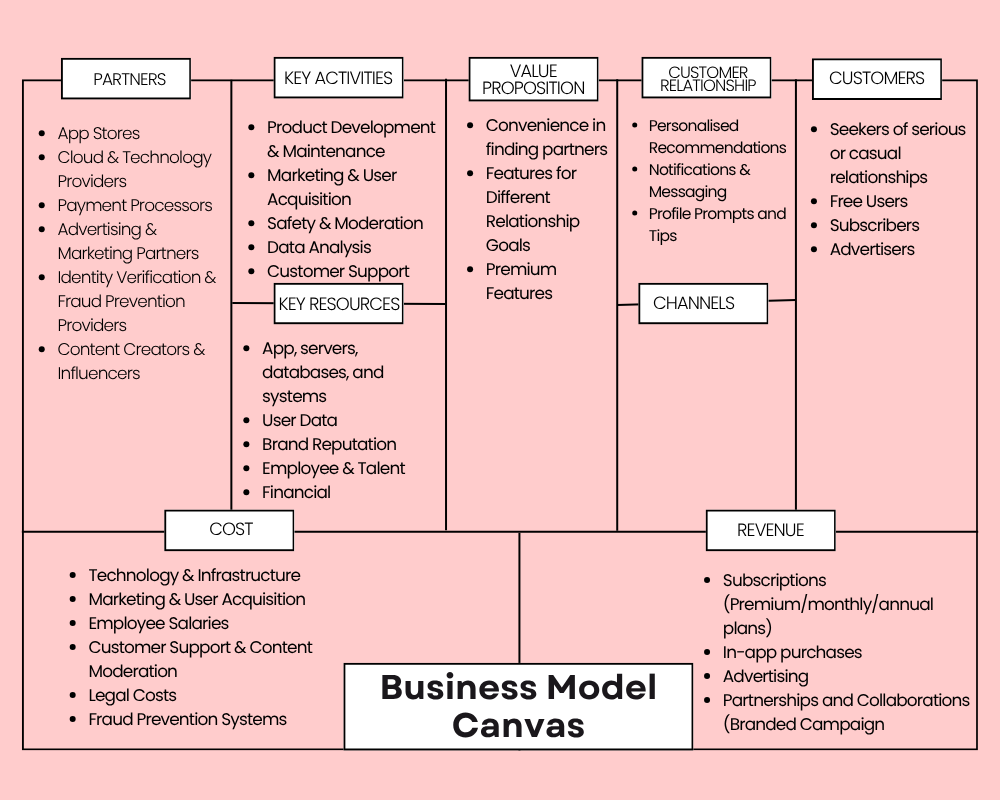
See that? BMC is not just applicable for food or clothing businesses…the usual stuff business students usually do.
Now, let’s swipe and look at each BMC component…
Who is Looking for Love? (Customer Segments)

Not everyone downloads a dating app for the same reason.
Some are looking for a serious relationship, while others want casual dating.
These differences make customer segmentation casual.
For example, Tinder appeals to broad audience seeking different kind of connections.
Meanwhile, Hinge positions itself around helping people find meaningful relationships (Thomas, 2024).
For women and nonbinary who love doing the first move, Bumble is a popular app with its “opening moves” feature (Prendergast, 2026).
These examples illustrate how dating platforms can target different needs, rather than treating every user alike.
Dating apps also serve paying and non-paying customers. Free users form the foundation of the community, while subscribers may pay for premium features.
Advertisers can represent another customer segment when a platform offers advertising opportunities.
What Value Do Dating Apps Offer? (Value Proposition)

Dating apps sell more than the possibility of finding love.
They offer convenience, access, choice, and opportunities to meet people beyond one’s usual social circle.
Think about it…Meeting someone new traditionally might involve mutual friends, social events, and a chance encounter.
Dating apps bring potential connections directly to your phone. Users can browse profiles, filter preferences, and start conversations without leaving home.
However, each platform must offer something distinct. Some emhasises serious relationships, others focus on accessibility and ease of use, amd some offer specialised communities or matching preferences.
Their value propositions need to answer one important question: Why should someone choose this app over its competitors?
For paying users, premium features may offer additional convenience, such as seeing who has liked their profile, accessing more discovery options, or improving profile visibility.
While these features do not guarantee a successful relationship, they may make the experience feel more convenient or efficient.
Ultimately, the strongest value proposition combines a useful product experience with a credible promise of better opportunities to connect.
From App Store to First Date (Channels)
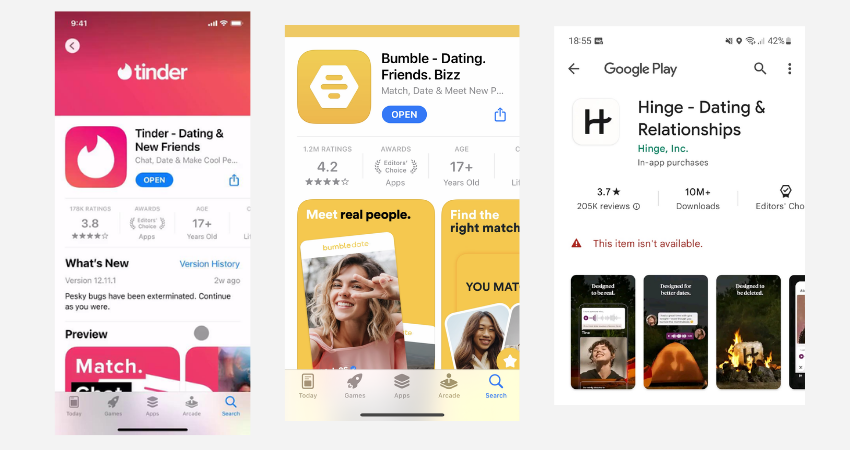
Even the best dating app cannot attract users if nobody knows it exists. Channels are the ways a business reaches its customers and delivers its value.
For dating apps, the journey often starts with social media advertisements, influencer recommendations, online reviews, or word of mouth.
Potential users then discover the app through Apple’s App Store or Google Play, download it, create a profile, and begin exploring potential matches.
The app itself becomes the primary channel for delivering the service.
Notifications, messaging features, profile recommendations, and subscription screens all form part of the user experience. Meanwhile, social media and digital marketing help attract new users.
Dating apps must also make their platforms accessible and easy to navigate. A confusing sign-up process or an app that frequently crashes can discourage users before they even make their first match.
Effective channels therefore do more than generate downloads; they help users move smoothly from discovering the platform to experiencing its value.
How Apps Keep Users Swiping (Customer Relationships)
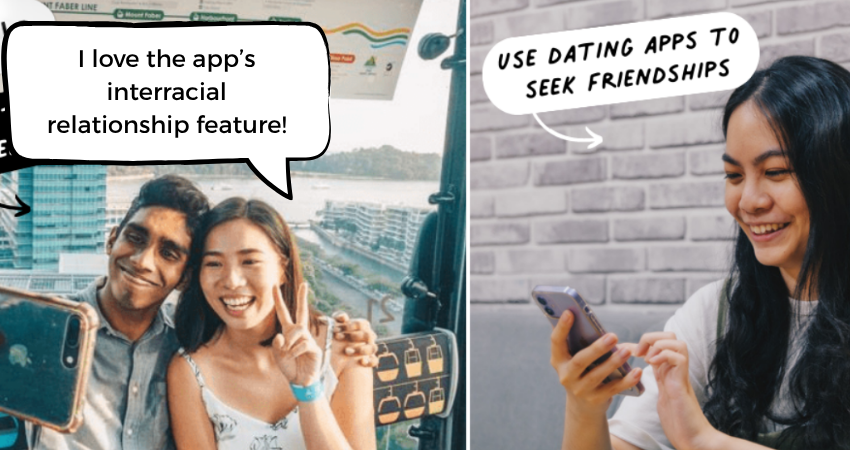
Attracting users is one thing. Keeping them engaged is another.
Dating apps build customer relationships through:
- Profile recommendations
- Personalised discovery
- Notifications
- Messaging tools
- Safety features.
Some also provide onboarding prompts or profile suggestions to help users present themselves more effectively.
Personalisation can make the experience feel relevant. For instance, users may receive recommendations based on their stated preferences and interactions.
However, recommendations are not necessarily perfect, and users should not assume that an algorithm can accurately predict romantic compatibility.
There is also a business tension here. A successful match might encourage someone to stop using a dating app, at least temporarily.
Yet the company needs enough ongoing engagement to sustain subscriptions and other revenue streams.
This creates an interesting question: should a dating app prioritise helping users find a partner quickly or encouraging them to keep exploring?
Ideally, a platform builds trust by helping users make meaningful connections while providing a safe, enjoyable experience.
Transparent policies, responsive support, and effective moderation can strengthen relationships with users far more sustainably than simply encouraging endless swiping.
How Dating Apps Turn Swipes Into Dollars (Revenue Streams)
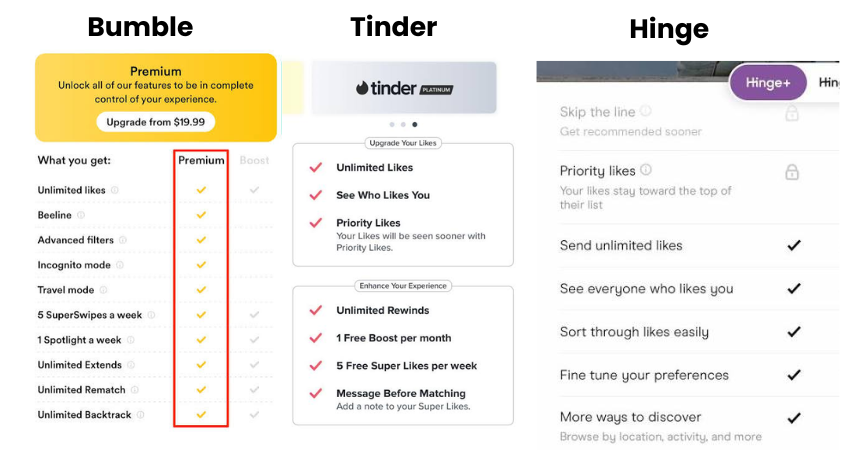
Love may be priceless, but running a dating app certainly is NOT.
One common revenue stream is the freemium model: users can access basic features for free, while optional subscriptions unlock additional benefits.
Tinder, for example, offers paid subscription tiers, while Bumble provides premium features through its paid offerings.
Depending on the platform and plan, these may include enhanced discovery tools, visibility features, or additional ways to interact with profiles.
In-app purchases provide another revenue source. Users may be able to purchase boosts or similar features to increase their profile’s visibility for a limited period.
Advertising can also generate income when platforms sell advertising placements to businesses.
The challenge is finding the right balance. If too many useful features are restricted to paying customers, free users may become frustrated. On the other hand, if premium features offer little additional value, users may see no reason to subscribe.
A sustainable revenue model must therefore make paid options attractive without undermining the free experience that helps build a large dating community.
The goal is not simply to monetise every swipe, but to create enough value that users willingly pay for additional benefits.
What Makes a Dating App Tick? (Key Resources)
Behind every profile is a collection of resources that makes the platform work.
First, there is technology: the app’s software, servers, databases, recommendation systems, and cybersecurity infrastructure.
These resources allow users to create profiles, discover potential matches, and communicate.
Second, user data plays an important role in delivering personalised services.
Profile information and stated preferences can help tailor recommendations, although sensitive personal information must be handled responsibly.
Dating platforms need strong privacy protections, secure data management, and clear policies about how information is collected and used.
Third, the user community itself is a crucial resource.
A dating app needs enough active users in relevant locations and communities to offer meaningful opportunities for connection. A technically impressive app may still struggle if users rarely find compatible people nearby.
Finally, brand reputation, employees, and financial resources help the company maintain and improve its service.
Together, these assets allow dating apps to compete in a crowded market while maintaining user trust.
The Work Behind Every Match (Key Activities)
Running a dating app involves much more than designing an attractive interface.
Product development and maintenance are ongoing priorities.
Teams must fix technical problems, improve usability, introduce features, and ensure the platform works reliably across devices.
They may also develop recommendation systems to help users discover potentially compatible people.
Marketing is another key activity. Dating apps need to attract new users, strengthen brand awareness, and encourage existing users to remain active.
Campaigns may focus on particular age groups, locations, interests, or relationship goals.
Safety and moderation are equally important. Platforms need ways to address fake profiles, harassment, scams, and inappropriate behaviour (O’Brien et al., 2025).
Reporting systems, account verification options, moderation teams, and enforcement policies can help reduce risks, although no system eliminates them completely.
Finally, companies must analyse performance.
Metrics such as user retention, subscription conversion, engagement, and successful matches can help managers assess whether the business is delivering value.
The challenge is ensuring that growth targets do not come at the expense of user safety or meaningful connections.
Who Helps Make the Match? (Key Partnerships)
Dating apps do not operate alone. Their business models depend on partnerships with external organisations and service providers.
- Apple’s App Store and Google Play provide important distribution channels.
- Cloud hosting and technology providers supply infrastructure for storing information and keeping the platform available.
- Payment processors support subscription purchases and other transactions.
- Advertising partners can help platforms generate revenue, while marketing agencies and content creators may help them reach new audiences.
- Some companies may also work with identity-verification or fraud-prevention providers to strengthen platform security.
These partnerships allow dating apps to access capabilities they might not efficiently develop in-house. However, they also create dependencies.
Changes to app-store policies, payment arrangements, technology costs, or privacy requirements can affect operations and profitability.
Choosing reliable partners is therefore a strategic decision, not merely an administrative task. A dating app’s success depends partly on the quality of the network supporting it behind the scenes.
The Price of Playing Cupid (Cost Structure)
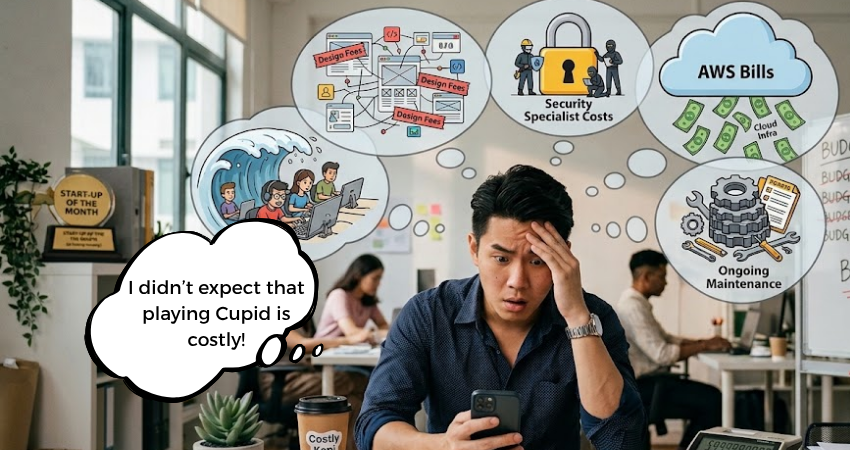
So, what does it cost to keep the romance going?
Technology expenses are a major consideration.
Dating apps need software developers, designers, cybersecurity specialists, cloud infrastructure, and ongoing maintenance.
As their user bases grow, they may need additional capacity to handle increased traffic and data processing.
Marketing can also be expensive. Advertising campaigns, promotional offers, and partnerships with creators all require investment, particularly when competing for attention in a crowded market.
Other costs include:
- Employee salaries
- Customer support
- Content moderation
- Fraud prevention
- Payment processing
- Legal compliance
- Privacy protection
These expenses are essential to maintaining a reliable and trustworthy service.
The balance between costs and revenue ultimately determines whether the business is sustainable. Subscription income and other revenue streams must cover operating expenses while leaving enough resources for future development.
For dating apps, cutting costs indiscriminately can be risky.
Underinvesting in moderation or cybersecurity, for example, may damage user trust and the brand’s reputation.
The smarter approach is to manage expenses while protecting the features and safeguards that make the service valuable.
Final Swipe: Is It Love or Just Good Business?
Dating apps may promise romance, but their success depends on much more than matching two profiles.
They must attract the right users, deliver a compelling experience, build trust, manage partnerships, and generate enough revenue to cover their costs.
The Business Model Canvas helps us see how these elements connect.
Every swipe is part of a bigger system involving technology, marketing, customer relationships, and commercial strategy.
And perhaps that is the most interesting twist!
While users are searching for someone special, dating apps are also searching for something—a sustainable business model.
In the end, the best match might just be the one between customer value and business success.
References:
Bachmann, N., Thienemann, A. K., Tüzün, A., Brunner, M., Tripathi, S., Pöchtrager, S., & Jodlbauer, H. (2025). The evolution of the business model canvas for digital sustainability. Procedia Computer Science, 253, 1012-1023. https://www.sciencedirect.com/science/article/pii/S1877050925001711
O’Brien, C. R., Roslan, N. A., Murdoch, S. J., Abu-Salma, R., Zytko, D., & Warner, M. (2025, April). Online dating platform safeguards and self-protection: How dating platforms characterise, respond to, and safeguard against harms. In Proceedings of the extended abstracts of the CHI conference on human factors in computing systems (pp. 1-8). https://dl.acm.org/doi/pdf/10.1145/3706599.3719825
Prendergast, C. (2026). Bumble Review (2026): How It Works And What Users Say. Forbes. https://www.forbes.com/health/dating/bumble-review/
Thomas, S.S. (2024). Hinge vs. Tinder: How to Decide Which One to Download, According to Dating Experts. Cosmopolitan. https://www.cosmopolitan.com/relationships/a61986993/hinge-vs-tinder-dating-app/

About Nick
Nick loves the written word. He spends part of his days wondering how to combine his two loves, writing and traveling. The rest of his time he spends having a little wine with friends along Siglap.
You must be logged in to post a comment.