I’ve Seen Hundreds of Projects and More Than 67% Failed. Here’s Why RACI Matrix Matters
Imagine you have S$10,000,000 for a mega project.
You hired hundreds of experts, and brought together some of the brightest minds in the industry.
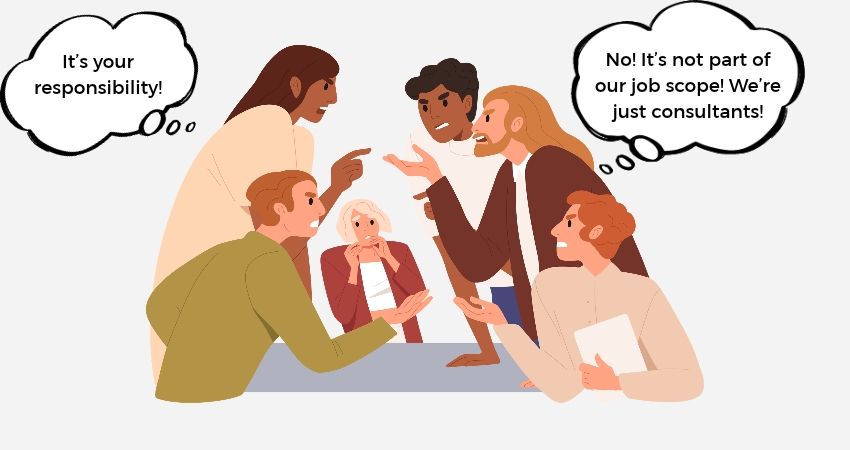
But one day, everything falls apart because nobody knows who’s supposed to do what.
Sounds ridiculous, right?
Unfortunately, managing a massive project isn’t as simple as gathering talented people and hoping for the best.
Mega projects may involve issues related to decision-making, leadership, stakeholder engagement, and coordination.
Imagine applying that challenge to a big project designed to protect Singapore from rising sea levels.
Who makes the decisions? Who approves the designs? And who’s accountable when something goes wrong?
That’s where the RACI Matrix comes in.
What Is a RACI Matrix?
The RACI Matrix is a project management tool that clarifies who does what, who makes decisions, and who needs to be kept in the loop (Tunca & Radulescu, 2024).
Basically, RACI stands for four roles:
- Responsible (R): The person or team doing the actual work.
- Accountable (A): The person ultimately answerable for completing the task and approving its outcome.
- Consulted (C): People whose expertise or feedback is needed before decisions are made.
- Informed (I): People who need updates but aren’t directly involved in making the decision.
Think of it as a responsibility chart for projects.
Instead of everyone assuming that someone else will handle a task, the matrix makes ownership explicit.
Ideally, each task should have one clearly identified accountable role, although several people may be responsible for carrying out the work.
Project Context: Will Singapore Sink?
Let’s get one thing straight: Singapore isn’t about to disappear underwater tomorrow.
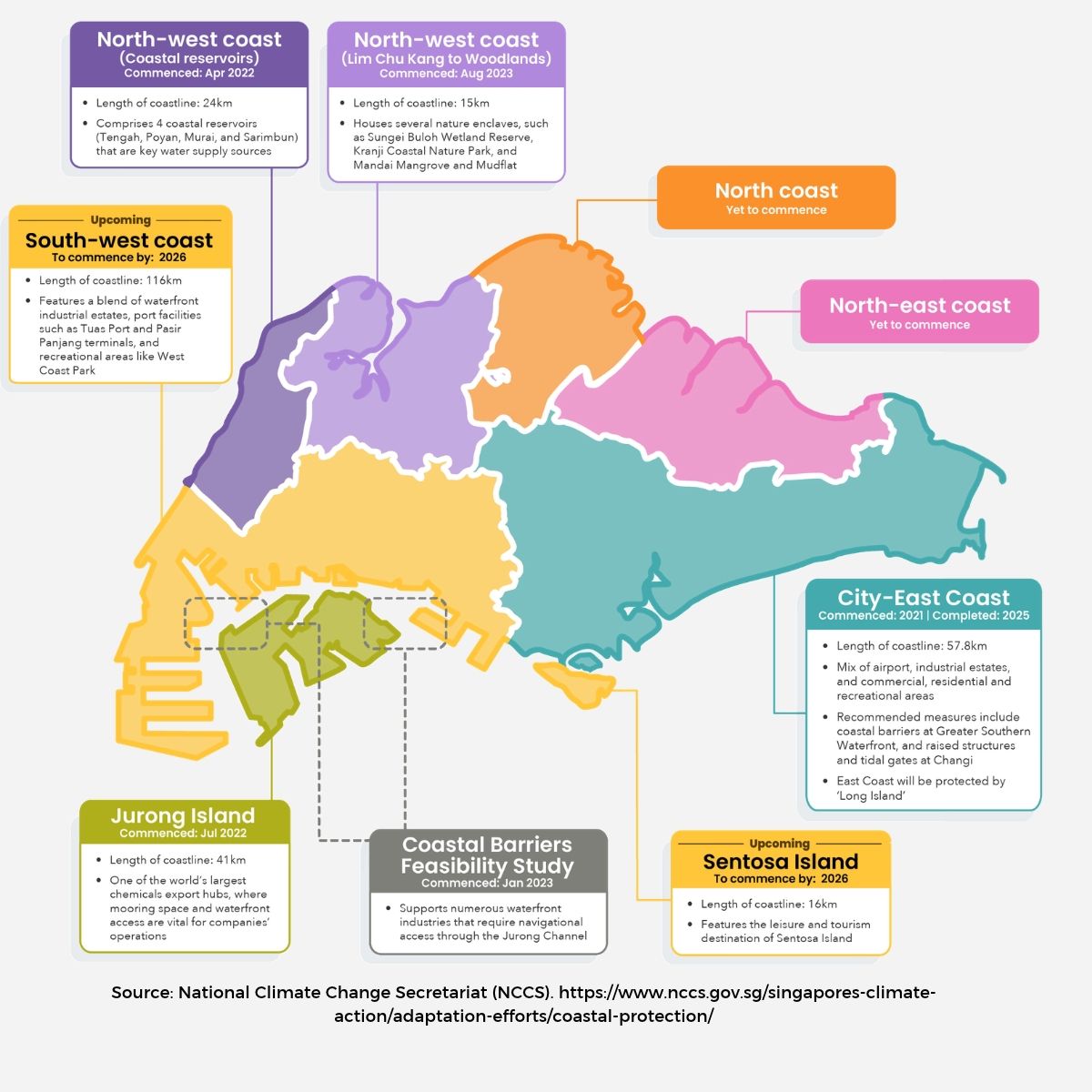
However, rising sea levels are a genuine long-term challenge for this low-lying island nation.
According to Singapore’s National Climate Change Secretariat (NCCS), mean sea levels around Singapore could rise by up to 1.15 metres by 2100.
When combined with extreme high tides and storm surges, sea levels could reach up to 5 metres above the current mean sea level.
Around 30% of Singapore’s land lies less than 5 metres above mean sea level (NCCS, 2026).
That’s a serious concern for coastal communities, transport infrastructure, businesses, and other essential facilities.
Singapore is already studying and developing coastal protection measures, with PUB leading national efforts to strengthen flood resilience.
The challenge isn’t simply about building something tall enough to keep the water out.
Coastal protection requires careful planning, engineering, environmental assessment, coordination, and long-term maintenance.
In other words, it’s exactly the kind of complex undertaking where project management matters.
Mission Briefing: All About the Mega-Project
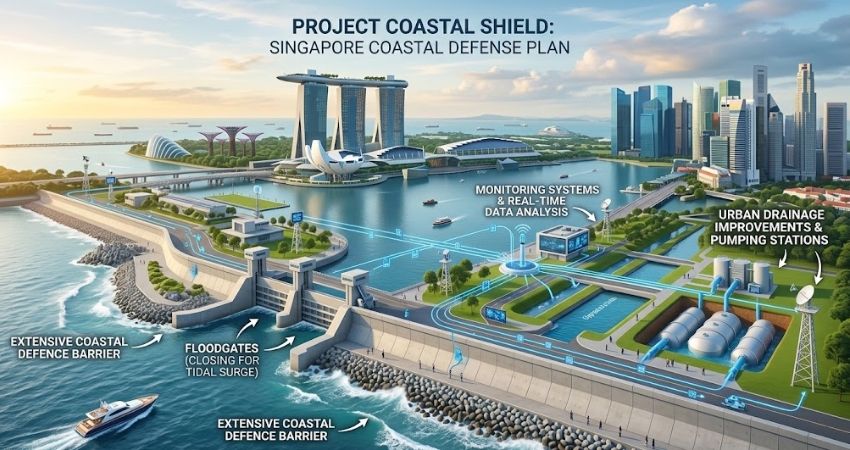
For this case study, let’s imagine that Singapore launches a hypothetical mega-project called Project Coastal Shield.
Its mission?
To construct an extensive coastal defence barrier along selected vulnerable sections of Singapore’s coastline, supported by floodgates, drainage improvements, and monitoring systems.
The proposed project has four objectives:
- Reduce coastal flood risks
- Protect critical infrastructure
- Minimise environmental damage
- Provide a defence system that can adapt to future sea-level changes.
Before construction begins, the project team needs a clear project scope statement.
This document defines the project’s objectives, deliverables, boundaries, constraints, and exclusions.
For instance, which coastal sections will be protected? Are nearby drainage systems included? What environmental requirements must be met?
Without clear boundaries, stakeholders could keep adding requirements, increasing costs and delaying completion.
Applying the RACI Matrix to the Mega-Project
A project of this scale would involve more than engineers and construction workers.
Government agencies, environmental specialists, finance teams, contractors, and affected communities would all have different responsibilities and expectations.
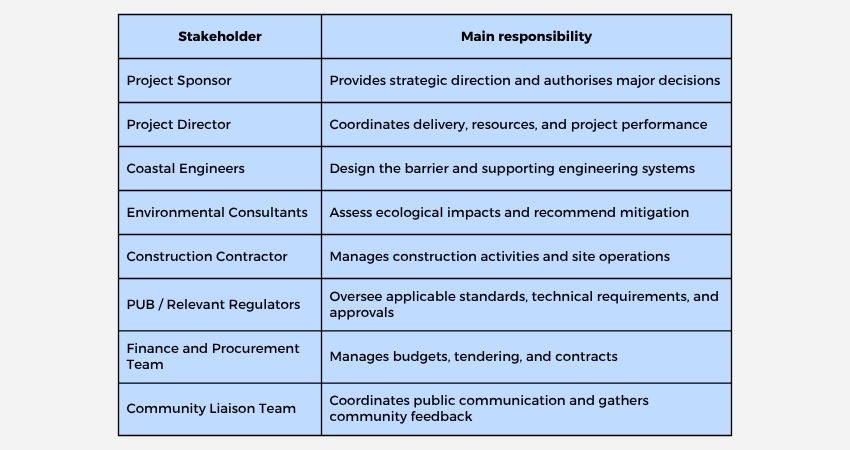
Let’s assign eight stakeholder groups to our hypothetical project (Figure 1).
Figure 1
Key Stakeholders and Responsibilities
Now, let’s see how the RACI Matrix can clarify their roles (Figure 2).
Figure 2
RACI Matrix
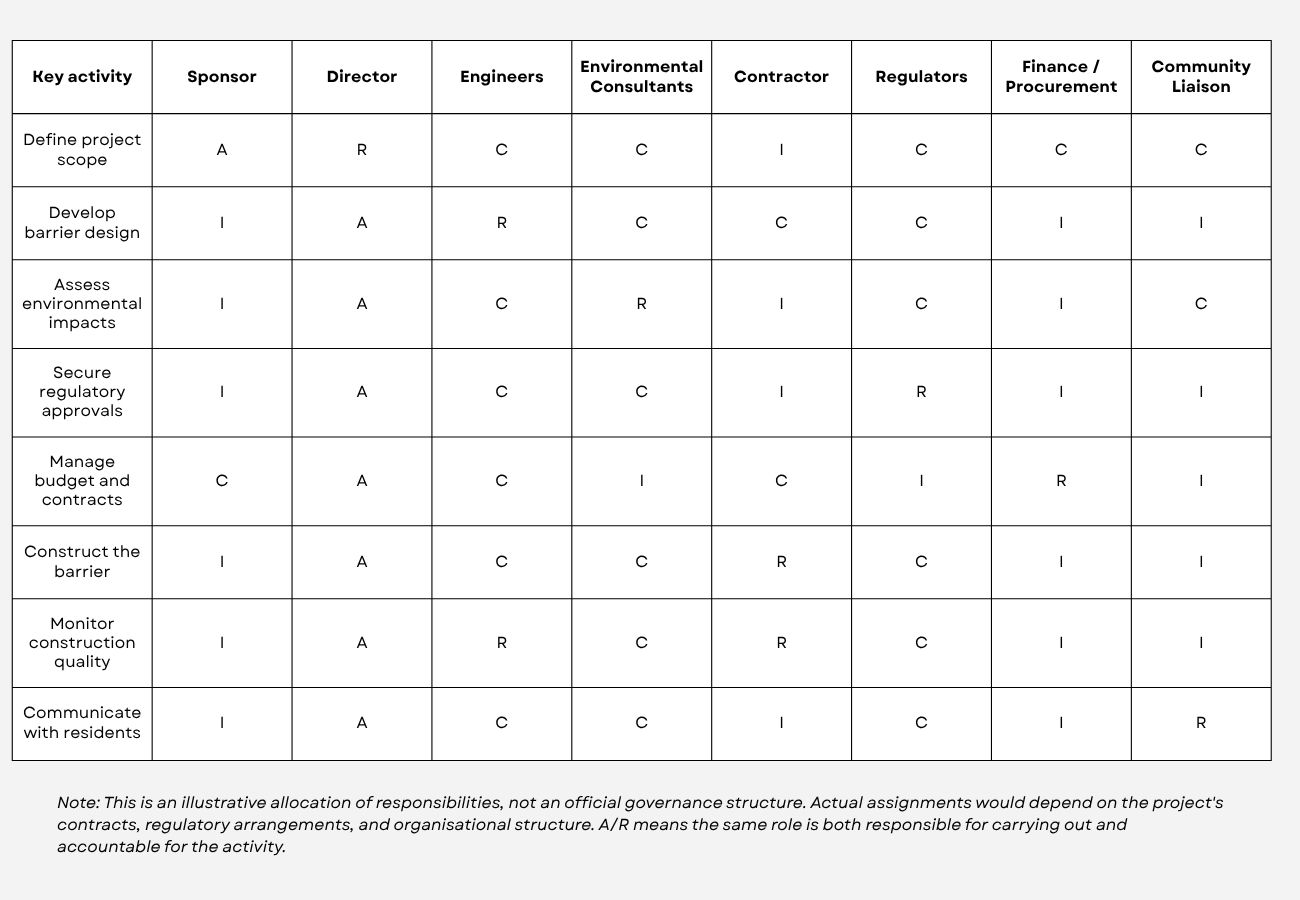
Notice how the matrix does more than list job titles. It clarifies who owns each outcome.
For example, the construction contractor carries out the physical construction, while the project director remains accountable for the project’s delivery.
Meanwhile, the relevant regulators are accountable for the approval activity in this simplified example, rather than leaving everyone to assume that someone else will secure the necessary approvals.
The community liaison team also has a defined role.
Residents might not design the barrier, but their feedback could help the project team identify concerns about noise, access, coastal recreation, or environmental impacts.
That’s the real value of RACI: it helps prevent important responsibilities from slipping through the cracks.
When the Plan Hits the Tides: What Could Go Wrong?
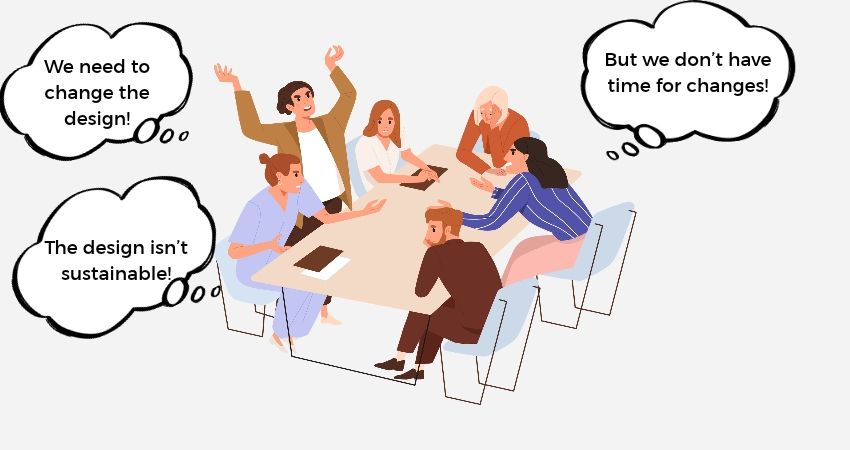
Even the best-designed RACI Matrix won’t magically guarantee a successful project.
Suppose engineers discover that a section of the proposed barrier needs a design change.
The contractor wants to avoid delays, environmental consultants raise concerns, and regulators request additional assessments.
Without clear decision-making arrangements, discussions could drag on while costs increase.
Another problem is scope creep. If stakeholders keep requesting extra features without formal approval, the project could exceed its budget or schedule.
Communication failures, conflicting priorities, and unclear accountability can make these problems worse.
RACI helps clarify who should act, approve, advise, or receive updates.
However, it cannot replace sound engineering, realistic budgets, effective leadership, or proper risk management.
The matrix is a coordination tool, not a guarantee against failure.
Beyond RACI: Keeping the Project on Track
RACI works best when combined with other project management tools.
A Work Breakdown Structure (WBS) breaks a massive project into smaller, manageable deliverables and work packages.
For Project Coastal Shield, these could include site surveys, design development, environmental assessments, procurement, construction, testing, and maintenance planning.
A project schedule, such as a Gantt chart, can then show when these activities should happen and which tasks depend on others.
A risk register helps the team track threats such as extreme weather, cost overruns, and construction delays.
Together, these tools answer three different questions:
- What needs to be done?
- Who is responsible?
- When must it happen?
That’s a much stronger foundation for managing a complex project than relying on meetings and assumptions alone.
Final Thoughts: Big Projects Need Clear Responsibilities
Singapore’s coastal protection challenge reminds us that major infrastructure projects involve more than money, materials, and impressive engineering.
They require people and organisations to work together toward a shared goal.
The RACI Matrix helps make that collaboration more manageable by clarifying responsibilities, accountability, consultation, and communication.
When combined with tools such as a project scope statement, WBS, schedule, and risk register, it gives project teams a clearer structure for turning ambitious plans into deliverable outcomes.
So, whether you’re coordinating a university group assignment or managing a multimillion-dollar infrastructure project, remember this: having talented people on your team is important, but making sure everyone knows their role can be just as crucial.
After all, even the strongest wall needs a well-coordinated team behind it.
References:
National Climate Change Secretariat. (2026). Coastal Protection. https://www.nccs.gov.sg/singapores-climate-action/adaptation-efforts/coastal-protection/
Tunca, M. V., & Radulescu, R. M. (2024). RACI And Organizational Performance Uber Case Study. In Proceedings of the 18th International Management Conference. https://conference.management.ase.ro/archives/2024/PDF/2_12.pdf

About Nick
Nick loves the written word. He spends part of his days wondering how to combine his two loves, writing and traveling. The rest of his time he spends having a little wine with friends along Siglap.
You must be logged in to post a comment.