PSS309: (Cybercrime) Formulate a Cybersecurity Plan for your household/family with fundamental cyber- hygiene do’s and don’ts.
Module / Subject / School:
PSS309: Cybercrime
Singapore University of Social Sciences (SUSS)
Requirements
Using academic journals and guides such as
- https://www.betterinternet.sg/Resources/Resources-Listing/Tools-and-resources-for-managing-your-own-safety-online
- https://www.ncsc.gov.uk/section/information-for/individuals-families
a) Formulate a Cybersecurity Plan for your household/family with fundamental cyber-hygiene do’s and don’ts.
Your plan should address the following:
- Household size, age and unique needs of family members
- Frequent activities, hardware and software used, etc.
- Types of capable guardianship interventions and mechanisms
- Other relevant factors
(30 marks)

What we score?
78%
Our Writer’s Comment
Start by clearly defining your household’s profile. Consider the size of your household, the age range, and the unique needs of each family member. For example, younger children might need more restrictive measures, while older members might require guidelines on safe online transactions. Be specific about the frequent activities, hardware, and software used in your household, as this will guide the cyber-hygiene measures you recommend.
When formulating the do’s and don’ts, make sure they are actionable and relevant to your household. Use the resources provided, such as the Better Internet and NCSC guides, to outline best practices. For example, you might suggest enabling two-factor authentication, regularly updating software, and educating family members about phishing scams. On the don’ts side, you could mention avoiding public Wi-Fi for sensitive activities or sharing passwords.
Capable guardianship interventions are a critical component of your plan. Think about who in your household can take on this role and what specific interventions they can implement. This might include setting up parental controls, monitoring online activities, or ensuring that security software is up to date. Tailor these interventions to your household’s unique characteristics to make them realistic and effective.
Finally, organize your plan logically, ensuring that each section flows naturally into the next.
Why are we trusted by Singaporean part-time students?
Just like you, many Singaporean students need help with their assignments. They have been highly satisfied with our model assignment writing services as we are easily contactable through whatsapp, and offers a 200% money-back guarantee.
Sample Assignment
While we have scored well for this assignment, we do not provide any sample assignment for this. If you’d like us to work on this, you can try our model assignment writing service.

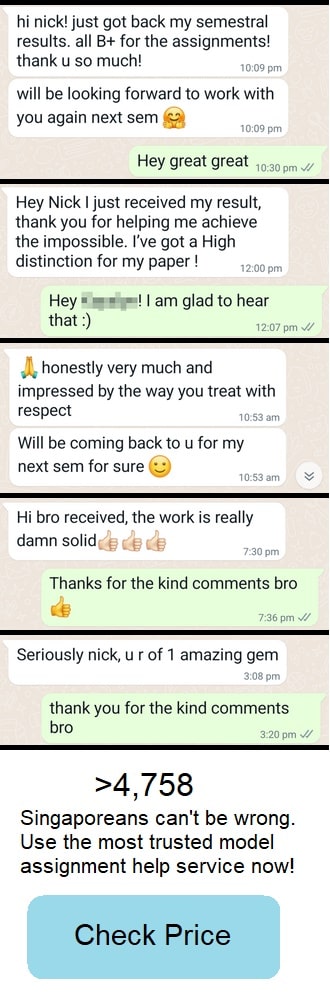
Join 3,450+ Singaporeans who have used our model assignment service.
Since 2010, inkmypapers have been helping part-time and full-time students in Singapore with their assignments. Zero AI, no plagiarism and a sure pass 200% money-back guarantee is what you can expect from us.
Nick Tan
Inkmypapers Founder