OSH7012: (Measuring Safety, Health and Wellbeing Performance) Write an essay evaluating the strengths, weaknesses and effectiveness of key leading and lagging indicators used by organisations
Module / Subject / School:
OSH7012: Measuring Safety, Health and Wellbeing Performance
Requirements
With relevant academic literature write an essay evaluating the strengths, weaknesses and effectiveness of key leading and lagging indicators used by organisations to evaluate safety, health and wellbeing performance.
Harvard citation and referencing should be used throughout.

What we score?
77%
Our Writer’s Comment
Based on the assignment requirements provided, here are some comments to help students score well on this assignment:
Leading indicators are proactive, focusing on activities that prevent incidents (e.g., safety training hours), while lagging indicators are reactive, measuring outcomes after incidents occur (e.g., injury rates).
In your essay, begin by defining these concepts and explaining their significance in an organizational context. Then, dive into the strengths and weaknesses of each type. For instance, leading indicators are valuable because they can predict and prevent issues, but they can be challenging to quantify and may not always correlate directly with outcomes. On the other hand, lagging indicators are easier to measure and directly reflect past performance, but they only tell you what went wrong after the fact, limiting their preventative value.
Effectiveness should be your next focus. Discuss how well these indicators work in practice. Are leading indicators truly predictive? Do lagging indicators provide enough insight to drive meaningful change? Use relevant academic literature to support your analysis, referencing studies or models that illustrate the effectiveness (or lack thereof) of these indicators in real-world settings.
Why are we trusted by Singaporean part-time students?
- Assurance of Academic Success: We are confident in the quality of our work so much so that we offer a 200% money-back guarantee if our work is not of sure-pass quality. This showcases our unwavering commitment to delivering exceptional essays that consistently meet the highest academic standards.
- Well-Established and Trusted: With a decade of experience in the industry, we have built a strong and reputable presence. Our long-standing track record speaks to our ability to consistently deliver outstanding results. Students can have confidence in our extensive expertise and our proven ability to help bachelor and master’s students excel in their academic pursuits.
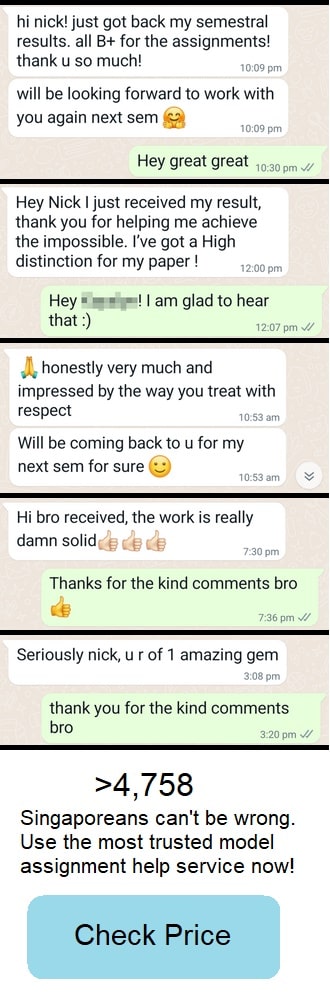
- Valuable Testimonials: We are proud to have received numerous testimonials from hundreds of satisfied students who have benefited from our services. These testimonials serve as a testament to the trust and satisfaction students place in our essay writing service. The positive feedback highlights the quality of our work and the positive impact we have had on our clients’ academic journeys.
Sample Assignment
While we have scored well for this assignment, we do not provide any sample assignment for this. If you’d like us to work on this, you can try our model assignment writing service.

Join 3,450+ Singaporeans who have used our model assignment service.
Since 2010, inkmypapers have been helping part-time and full-time students in Singapore with their assignments. Zero AI, no plagiarism and a sure pass 200% money-back guarantee is what you can expect from us.
Nick Tan
Inkmypapers Founder